
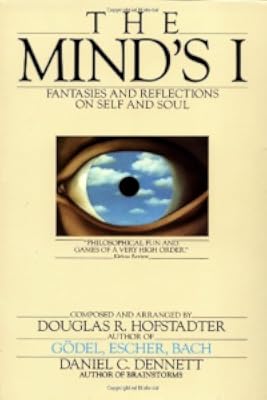
The Mind's I: Fantasies and Reflections on Self and Soul
by Douglas Hofstadter (Composer), Daniel C. Dennett (Composer)
On This Page
Description
With contributions from Jorge Luis Borges, Richard Dawkins, John Searle, and Robert Nozick, The Mind's I explores the meaning of self and consciousness through the perspectives of literature, artificial intelligence, psychology, and other disciplines. In selections that range from fiction to scientific speculations about thinking machines, artificial intelligence, and the nature of the brain, Hofstadter and Dennett present a variety of conflicting visions of the self and the soul as explored show more through the writings of some of the twentieth century's most renowned thinkers. show lessTags
Recommendations
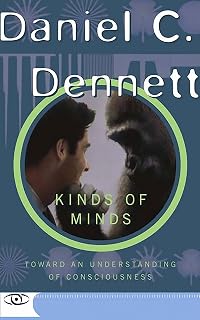
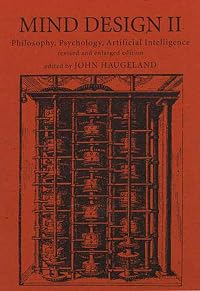
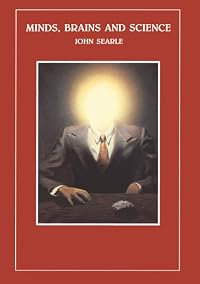
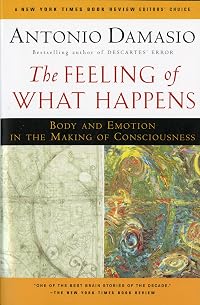




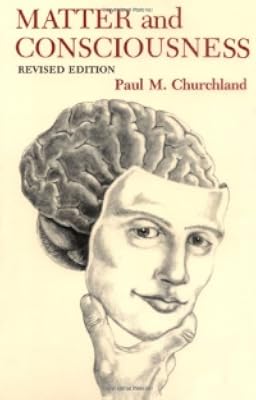
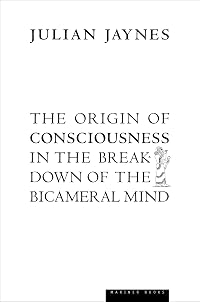
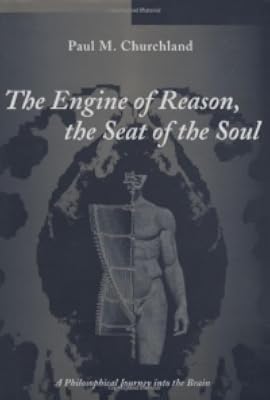
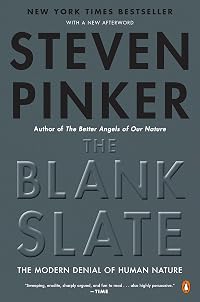


Member Recommendations
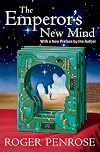
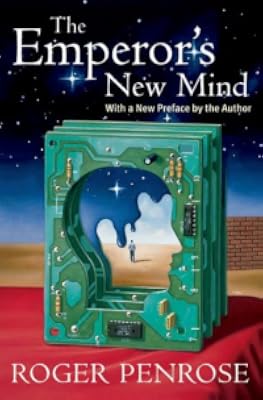
P_S_Patrick Both books deal with consciousness. Where the Mind's I is provocative and intentionally interesting, it lacks the objective truths that The Emperor's New Mind ascertains about consciousness. These books will not necessarily appeal to the same readers, as ENM is heavily technical, while TMI takes a more playful and questioning stance. But if you have a serious interest in consciousness, and a good level of mathematical and physical understanding, and enjoyed The Mind's Eye, then you should find Emperors New Mind a satisfying read too.
11
Member Reviews
Neither Douglas Hofstadter nor Daniel Dennett are easy writers to read quickly. Dennett’s Darwin’s Dangerous Idea and Hofstadter’s Surfaces and Essences are two of the most demanding books I’ve picked up in the recent past. Luckily, in The Mind’s I, an effort that combines both their talents, they find a way to better let their readers in. This book looks at the philosophical concept of the self—how a mind views itself—through the writings of other people. Hofstadter and Dennett use historic and imaginative accounts written by Jorge Luis Borges, Alan Turing, Richard Dawkins, and many others as points of reflection from which they can get into their intended philosophical discussions. This helps accomplish two very show more interesting goals: pointing the reader towards other authors they might not have known before and helping the reader through some of the more complex thought experiments surrounding the concept of the self. All throughout the book there are smatterings of philosophy, fiction, physics, and even free will. They manage to steer clear of the more tautological loops that philosophy sometimes falls in to, and in the end, arrange a very good book that makes the reader think deeply without straining themselves. An intense but intriguing read. show less
I picked up this book partly because I found Goedel, Escher, Bach a brilliant read, and partly because I find the subject of consciousness interesting in itself.
This book features numerous articles and excerpts from a wide array of authors, including Jorge Luis Borges, Alan Turing, Richard Dawkins, and a number of less well known (outside computer science) intellects. These passages all have some relevance to the topics of "Self", "Soul", "Consciousness", and "Free Will", and the pieces are each analysed by one or both of the editors. I found quite a few of these to be worth while reading, and some were very interesting and enlightening. There were a few that were excercises in idiocy, and ultimately a waste of time to read, with the show more simple point they were trying to illustrate being obvious from the start. Also large excerpts from GEB and the Selfish Gene were present, which was annoying as I already have them and have read them within recent memory, though readers unfamiliar with these works should not mind this, and to be fair GEB would bear re-reading more than most books.
On the whole I found the opinions of the editors and articles to be too close to the strong AI position, with the brain frequently being assumed analogous in structure to a digital computer, and entirely mappable and reproduceable. I am glad I have read Roger Penrose's books on consciousness (which are not as readable as this by the way ), otherwise I may well have been swept along with these views and their otherwise unavoidable implications. A frequently made assumption of this book is that the brain is identically mappable, (thus preserving self), though there is currently no reason to believe it is, with accurate quantum measurements not ever being possible under current theory. This makes a lot of the articles seem irrelevent to reality, though, never the less interesting. Overall, depsite this, it is an interesting read, and there is a lot in it of worth. It is a longish book, but the type is large enough, and it didn't take me that long to get through it. It will disappoint those expecting another must-read like Goedel, Escher, Bach, but for others less picky it should make do. show less
This book features numerous articles and excerpts from a wide array of authors, including Jorge Luis Borges, Alan Turing, Richard Dawkins, and a number of less well known (outside computer science) intellects. These passages all have some relevance to the topics of "Self", "Soul", "Consciousness", and "Free Will", and the pieces are each analysed by one or both of the editors. I found quite a few of these to be worth while reading, and some were very interesting and enlightening. There were a few that were excercises in idiocy, and ultimately a waste of time to read, with the show more simple point they were trying to illustrate being obvious from the start. Also large excerpts from GEB and the Selfish Gene were present, which was annoying as I already have them and have read them within recent memory, though readers unfamiliar with these works should not mind this, and to be fair GEB would bear re-reading more than most books.
On the whole I found the opinions of the editors and articles to be too close to the strong AI position, with the brain frequently being assumed analogous in structure to a digital computer, and entirely mappable and reproduceable. I am glad I have read Roger Penrose's books on consciousness (which are not as readable as this by the way ), otherwise I may well have been swept along with these views and their otherwise unavoidable implications. A frequently made assumption of this book is that the brain is identically mappable, (thus preserving self), though there is currently no reason to believe it is, with accurate quantum measurements not ever being possible under current theory. This makes a lot of the articles seem irrelevent to reality, though, never the less interesting. Overall, depsite this, it is an interesting read, and there is a lot in it of worth. It is a longish book, but the type is large enough, and it didn't take me that long to get through it. It will disappoint those expecting another must-read like Goedel, Escher, Bach, but for others less picky it should make do. show less
This is a collection of ruminations about the self and the mind with an eye towards understanding how artificial intelligence may attempt to duplicate/recreate both or either. It has writings from the late 70's and early 80's when AI was more speculative than actual. The essays and fictional speculations from writers as diverse as Stanislaw Lem and Jorge Luis Borges attempts to pinpoint the challenges of recreating man's mind. Man's center continues to shift as these writers make clear.
From Fluid Concepts and Creative Analogies I was led back to the copy of The Mind’s I that had stood unread (and thought unapproachable) for several years.
This composition and arrangement (their words) by Hofstadter and Dennett brings together two of the foremost thinkers and explorers of ideas about consciousness and thus about subjective experience. Whilst Hofstadter, as we have seen, approaches from the perspective of Artificial Intelligence (with added philosophy), Dennett leads from the philosophical perspective (his Consciousness Explained is briefly reviewed here).
The book is in six sections: A Sense of Self; Soul Searching; From Hardware to Software; Mind as Program; Created Selves and Free Will; The Inner Eye. Each section show more has a handful of essays or extracts illuminating the topic of the section followed by brief reflections by one of the two arrangers.
The purpose of the book is, I believe, to enlarge the map of thought in this area and gently provoke the testing of assumptions, beliefs and values. In this ambition I think you will find it succeeds and, as an added bonus, many of the selections are quite delightful on their own rights. Good reading for an autumn evening or six. show less
This composition and arrangement (their words) by Hofstadter and Dennett brings together two of the foremost thinkers and explorers of ideas about consciousness and thus about subjective experience. Whilst Hofstadter, as we have seen, approaches from the perspective of Artificial Intelligence (with added philosophy), Dennett leads from the philosophical perspective (his Consciousness Explained is briefly reviewed here).
The book is in six sections: A Sense of Self; Soul Searching; From Hardware to Software; Mind as Program; Created Selves and Free Will; The Inner Eye. Each section show more has a handful of essays or extracts illuminating the topic of the section followed by brief reflections by one of the two arrangers.
The purpose of the book is, I believe, to enlarge the map of thought in this area and gently provoke the testing of assumptions, beliefs and values. In this ambition I think you will find it succeeds and, as an added bonus, many of the selections are quite delightful on their own rights. Good reading for an autumn evening or six. show less
This book was a lot of fun to read. It's a collection of science fiction short stories and mostly-easy-to-read philosophical essays about consciousness, perception, artificial intelligence, etc. It was published 30 years ago, but it shows almost no signs of being outdated, probably because these are some of the most difficult problems to address in both science and philosophy.
A lot of good stuff here, but as a collection from many different writers it's not exactly coherent.
Since I don't hold to the author's views about consciousness -- or the possibility of algorithmic self-awareness -- this book's ideas are not compelling. Instead, I recommend that after reading Hofstadter's Gödel, Escher and Bach one read Roger Penrose's The Emperor's New Mind and also his Shadows of the Mind. I'm biased. I admit it. One of the curses of self-awareness. ;-)
Members
- Recently Added By
Published Reviews
ThingScore 75
More philosophical fun and games, some of a very high order, from the authors of, respectively, Godel, Escher, Bach, and Brainstorms. Actually, this is an anthology, and there are some 17 other contributors, but Hofstadter and Dennett take turns commenting on all 27 pieces, so they can claim to have "composed and arranged" it. (...) The writing is without exception polished or at least clear show more and readable, the topic is steadily interesting, and the dialectical fireworks make a fascinating spectacle. show less
added by SandraArdnas
Lists

Books in the Bibliography of The Illusion of Conscious Will by Daniel Wegne
273 works; 1 member
Author Information

Douglas Hofstadter is College of Arts and Sciences Professor of Cognitive Science at Indiana University

Daniel C. Dennett is a University Professor and Austin B. Fletcher Professor of Philosophy at Tufts University and the author of numerous books including Intuition Pumps and Other Tools for Thinking, Breaking the Spell, Darwin's Dangerous Idea, and Consciousness Explained.
All Editions
Some Editions
Series
Belongs to Publisher Series
Work Relationships
Common Knowledge
- Canonical title*
- De spiegel van de ziel
- Original title
- The mind's I : fantasies and reflections on self and soul
- Alternate titles
- De spiegel van de ziel : fantasieën en reflecties over ik en geest; The Mind's I: Fantasies and Reflections on Self and Soul
- Original publication date
- 1981
- People/Characters
- Locke, John, 1632-1704; Sigmund Freud; E. R. John; Karl Lashley; James Lackner; Merrill Garrett (show all 56); Jorge Luis Borges; Baruch Spinoza; D. E. Harding; Harold J. Morowitz; Carl Sagan; Francis Crick; Thomas Henry Huxley; Albert Einstein; Werner Heisenberg; Fritjof Capra; Gary Zukav; Eugene Wigner; Lawrence B. Slobodkin; Hugh Everett III; Alan Turing; Jefferson Lister; Ada Byron Lovelace; Douglas Hartree; Charles Babbage; John Serle; Stanisław Lem; Michael Kandel; Terrel Miedaner; Allen Wheelis; Gregor Mendel; Richard Mattuck; Pierre de Fermat; Diophantus; Johann Sebastian Bach; M. C. Escher; Arnold Zuboff; David Hawley Sanford; Marvin Minsky; Rudy Rucker; Christopher Cherniak; C. H. Whitely; J. R. Lucas; Bill Gosper; John Horton Conway; Raymond M. Smullyan; Jonathan Edwards; John R. Searle; Roger Schank; Thomas Nagel; Indira Gandhi; Emil Du Bois-Reymond; Justin Leiber; Douglas R. Hofstadter; Daniel Dennett; Robert Nozick
- First words
- The other one, the one called Borges, is the one things happen to.
- Last words
- (Click to show. Warning: May contain spoilers.)And which decision do you hope for?
- Original language
- English
- Canonical DDC/MDS
- 126
- Canonical LCC
- B29 .H58
*Some information comes from Common Knowledge in other languages. Click "Edit" for more information.
Classifications
Statistics
- Members
- 3,010
- Popularity
- 5,895
- Reviews
- 24
- Rating
- (3.99)
- Languages
- 8 — Dutch, English, French, German, Italian, Russian, Slovenian, Turkish
- Media
- Paper, Ebook
- ISBNs
- 20
- ASINs
- 16